
Expertise Area’s
through a lens of
Research, Design and Development
Design applied to an industrial context
Overview Expertise Areas
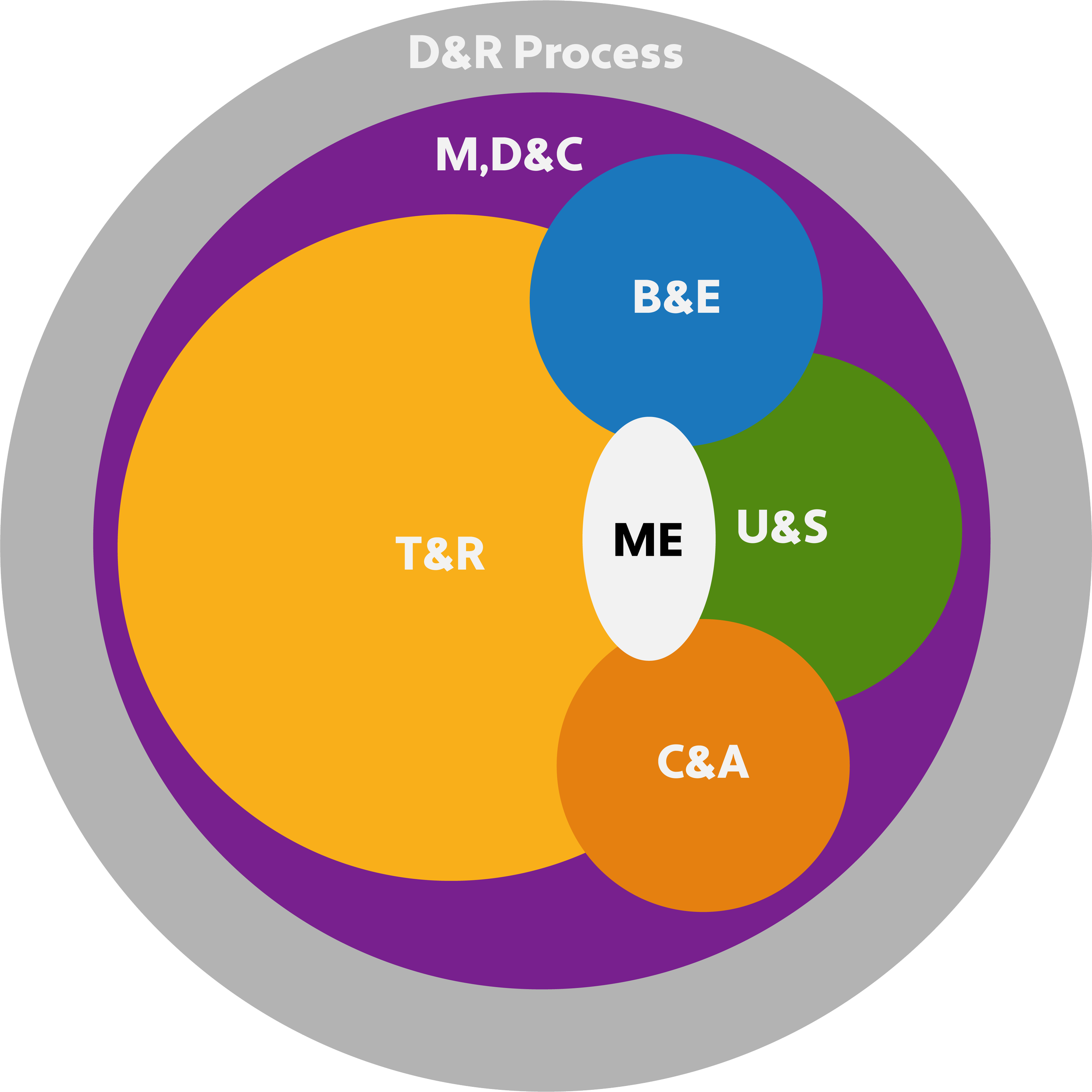
ME: Technical design for shared understanding

Technology & Realization
Technology and realisation work in two ways for me, how I build, and how I investigate, generating or using technology to drive the research.
I prototype at a fidelity chosen to fit the goal of the activity, putting the right amount of effort where it counts, from a VR environment in Unity and C#, to a self-trained machine-learning model that reads posture (Daisy), to electronics on Arduino (M1.1). My depth is in additive manufacturing and computational fabrication. It began with mechanically testing lattice structures (M1.2) and matured in my thesis, an interactive toolkit in Python that uses nTop to generate geometry through code.
I treat technical knowledge as a tool for decision-making, judging feasibility in a project. My internship at AAE, working alongside engineers and seeking expert input, kept this grounded. For me, technology and realisation are the bridge between input and output, where ideas and data become something that people can use.
Math, Data &
Computing
Math, data and computing sit at the centre of my process. It is where input from users, prototypes, and stakeholders comes together, and where I turn that input into the requirements a design is built on.
I work to make complex, abstract data usable, taking what is hard to read on a screen or in a dataset and turning it into something a user can act on. This runs into two directions. I structure human input into clear requirements through thematic analysis (FMP), and I treat data as a generative material where computation produces geometry from rules and constraints (M2.1), and where a model can be trained to read human movement (Daisy). Across these, my aim is the same, to close the distance between what data holds and what people can do with it.
User & Society
A design only creates value if it fits how people actually think and act, so I work to understand the why and how behind what they do before shaping a solution.
I choose research methods to explore a need from more than one angle using a contextual inquiry, interviews, and observations in an ethnographic study (M2.1), or a controlled user testing with the SAM scale in a lab study (DCM100). I structure what these found through thematic analysis, turning lived experiences into the requirements a design is built on. For example, I use the Technology Acceptance Model to understand what makes people take up something unfamiliar, since I design for people meeting a technology new to them. Throughout, I stay aware of the ethics of involving people responsible (DBM140) and of the implications a design carries for those it is meant for.
Creativity & Aesthetics
I use creativity and aesthetics to communicate and visualise ideas. How something is shown decides whether people understand it. My central question is always how a visual or interactive form makes something complex clear, and what makes it stick.
Early in a project, I treat the research materials themselves as designed object, building the tool that draw out what people think, as in the workshops from (FMP). When designing a prototype, I focus on communicating what it does, where the form carries the meaning, as in (DCM110), where iterated artefacts show intuitive interaction. Across both, I hold to clarity as the aesthetic that matters in my work, presenting information richly enough to be understood without overloading the user.
Business & Entrepeneurship
Business and entrepreneurship is where I work out what a stakeholder needs to adopt a design, and where its economic value sits.
I map who holds a stake in a concept and how value moves between them through stakeholder analysis, using a salience model and Actor Network Theory (FMP), turning a prototype into something with a realistic path to use. I am drawn to how a design answers not only the wanted problem but the unknown one that surfaces from the data, since that is often where new value lies. I seek expert input to ground scenarios in reality, attending additive manufacturing conferences and trade shows to see how other approach the field and to test my own thinking against practice (CONFERENCE).
I built the foundation for this through (DAM180), using the Pitching Canvas to structure a value proposition, and through (DAM170), where working organisational cases with situational leadership and change models taught me how decisions move through a company.
Design & Research process
Across my project I work where human input meets technical realisation, moving between understanding what people need and building something they can use. I use research-for-design processes, with the expertise areas as the grounding for the approaches and methods. This means using qualitative research and thematic analysis on one side, computational modelling and prototyping on the other, letting each expertise area cover the limits of the next. Whether the complexity comes from a dataset, a manufacturing process, or an unfamiliar technology, my aim to turn it into something a user can read, decide on, and act with.